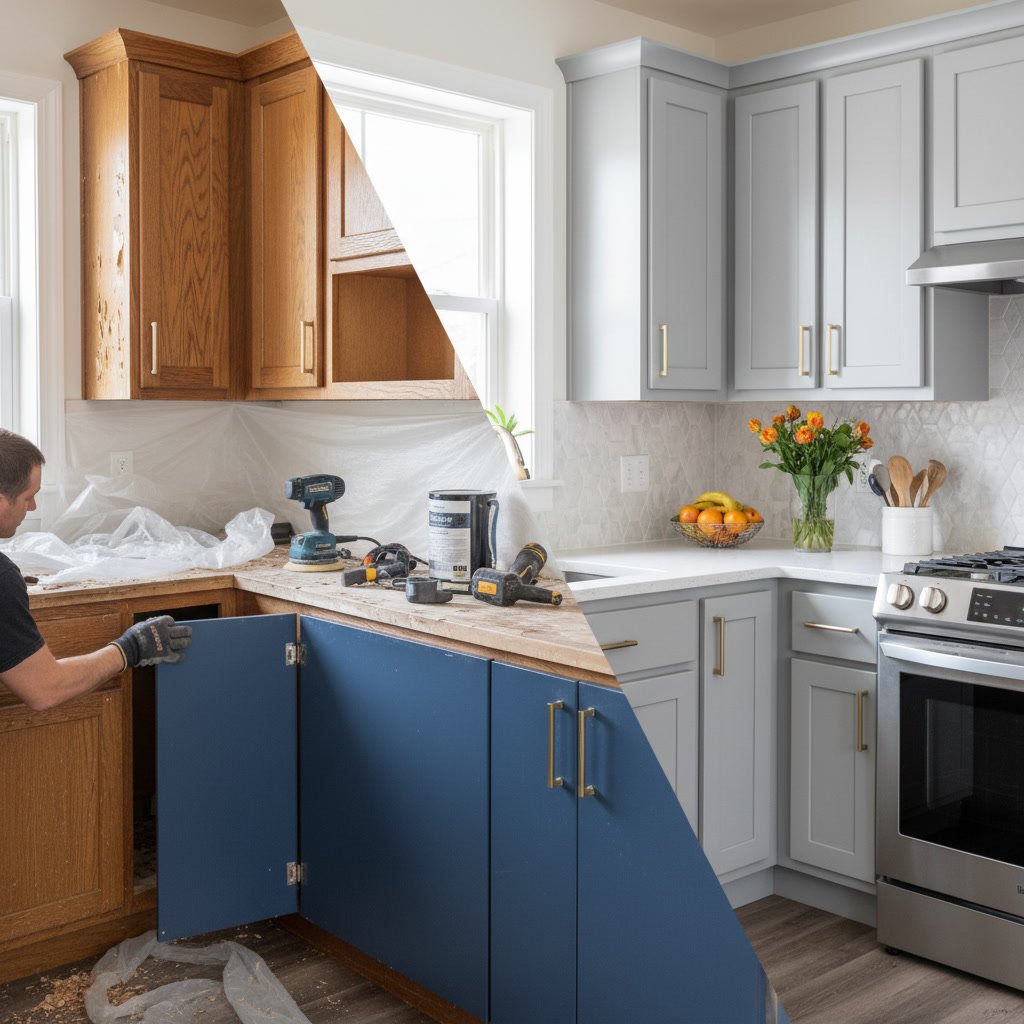
Kitchen cabinet refacing transforms the visible surfaces of your existing cabinets by applying new veneer to the cabinet boxes and installing brand-new doors and drawer fronts. Full replacement tears out everything and installs completely new cabinetry from the ground up. Refacing typically costs $4,000 to $9,000 for an average kitchen, while replacement runs $12,000 to $25,000 or more, with refacing projects usually completing in three to five days versus two to four weeks for replacement.
Understanding the Cabinet Refacing Process
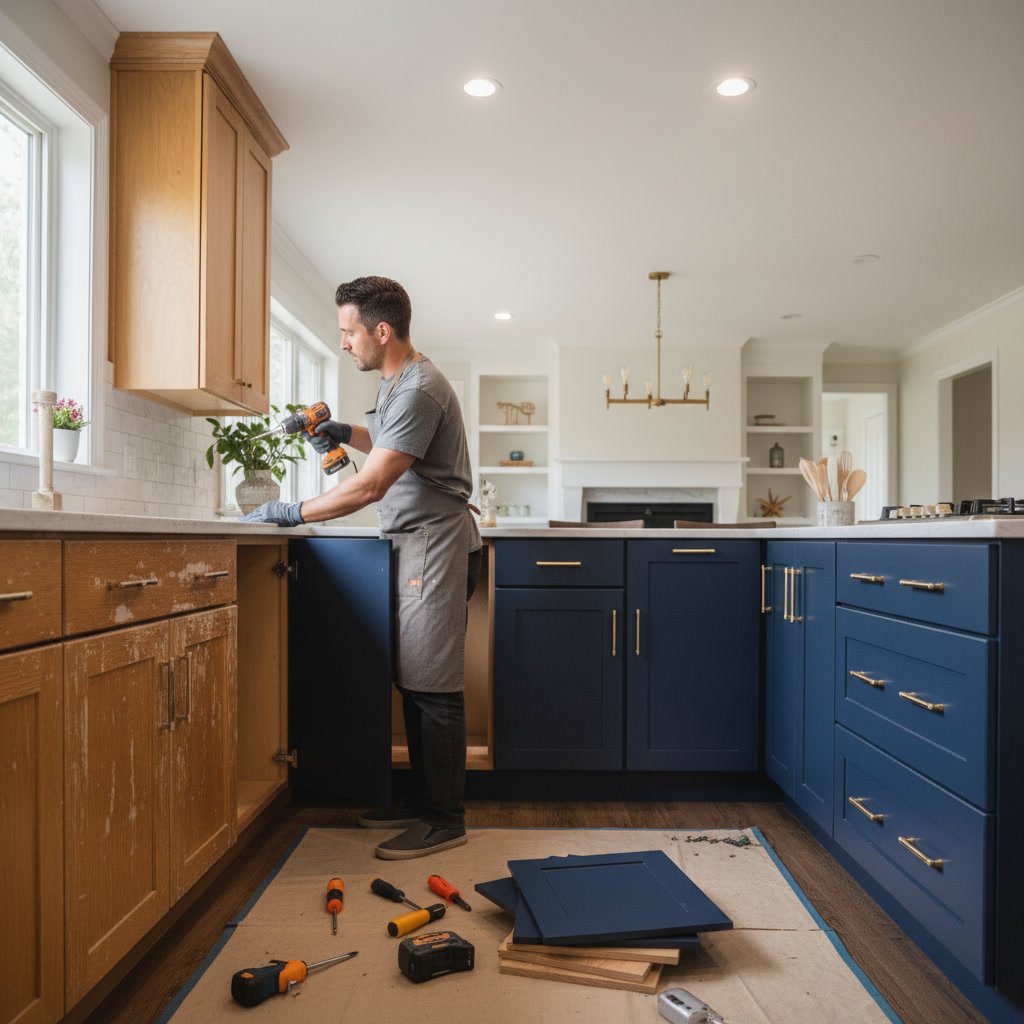
Refacing keeps your existing cabinet boxes in place. The process starts with removing all doors, drawer fronts, and hardware. A professional then applies a thin layer of real wood veneer, rigid thermofoil, or laminate to match your new doors over the exposed cabinet frames and sides.
New doors and drawer fronts arrive pre-made to your measurements and style preferences. Hinges get replaced, and soft-close mechanisms can be added during installation. The entire cabinet interior remains untouched, which means your current shelf configuration and cabinet layout stay exactly as they are.
When Refacing Makes the Most Sense
Refacing works best when your existing cabinet boxes are structurally sound. If the frames are solid wood or quality plywood without water damage, sagging, or broken joints, refacing delivers excellent results. Cabinets built in the last 20 to 30 years with standard construction methods are usually ideal candidates.
Your current kitchen layout should meet your needs. Refacing does not change where cabinets sit or how much storage you have. If you wish your sink were on a different wall or you need more upper cabinets, refacing will not solve those problems.
How Full Cabinet Replacement Works
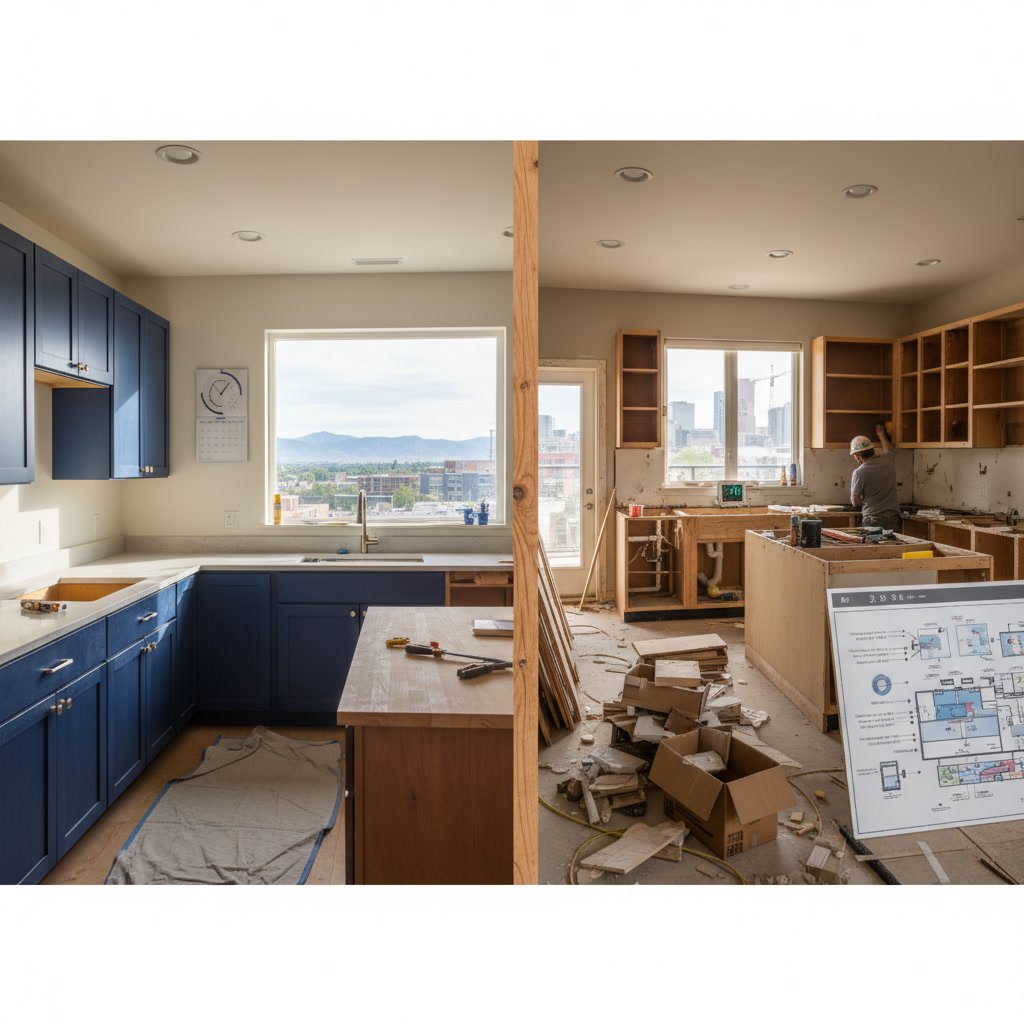
Replacement means demolition. Crews remove every cabinet, typically cutting them into sections for easier removal. This exposes walls, flooring, and plumbing connections. You will see exactly what is behind your old cabinets, and sometimes that reveals electrical or plumbing issues that need addressing.
New cabinets arrive either pre-assembled or in flat-pack form for on-site assembly. Installation begins with upper cabinets to avoid damage from ladders and tools, then base cabinets get leveled and secured. Carpentry skills become critical during this phase because even small installation errors affect door alignment and countertop fit.
Countertops cannot be templated until base cabinets are fully installed and settled. That adds another week or more to the timeline. Plumbing and electrical connections often need adjustment to match new cabinet configurations, especially if you are changing the sink or appliance locations.
Cost Breakdown: Refacing vs Replacement
Refacing costs average $150 to $300 per linear foot, depending on materials. A standard 10-foot by 10-foot kitchen with 20 linear feet of cabinets runs $3,000 to $6,000 in materials and labor. Premium wood veneers or specialty finishes push that higher.
Replacement starts at $200 per linear foot for stock cabinets from big-box stores and climbs to $500 or more per linear foot for semi-custom or custom cabinetry. The same 20-linear-foot kitchen costs $4,000 to $10,000 for stock cabinets alone, not including installation labor, which typically doubles the total cost.
Hidden costs matter. Replacement often requires painting walls that were covered by old cabinets, patching flooring gaps, and updating electrical outlets. Disposal fees for old cabinets add $200 to $500. Refacing generates almost no additional work beyond the cabinet surfaces themselves.
Timeline Differences for Denver Kitchen Projects
Refacing projects in Denver typically take three to five business days from start to finish. Day one involves removing old doors and drawer fronts and preparing surfaces. Days two and three cover veneer application and any necessary touch-up. Days four and five handle door installation, hardware, and final adjustments.
Your kitchen remains partially functional during refacing. Base cabinets stay accessible for dishes and cookware. You lose access to items behind doors being worked on, but the disruption is manageable. Most families continue cooking simple meals throughout the process.
Full replacement stretches to two to four weeks minimum. Demo day creates dust and noise. Cabinet installation takes three to five days. Countertop templating happens next, then fabrication requires another week. Final countertop installation, sink hookup, and trim work add several more days. Your kitchen becomes unusable during this entire period.
Material and Style Options for Each Method
Refacing offers three main veneer choices: real wood veneer provides natural grain patterns and accepts stain, rigid thermofoil creates smooth painted finishes in any color, and high-pressure laminate delivers durability in modern solid colors or wood-look patterns. Door styles range from traditional raised panel to contemporary flat slab designs.
Replacement opens every possibility. You can choose frameless European-style construction for more interior space or traditional face-frame American cabinets. Box materials vary from particleboard in budget lines to furniture-grade plywood in premium brands. Specialty features like pull-out spice racks, corner lazy susans, and soft-close drawer glides integrate during manufacturing.
One expert-level insight: refacing with high-quality materials often delivers better results than replacing with bottom-tier stock cabinets. A refaced cabinet with solid existing bones and premium doors outperforms a cheaply made new cabinet with thin walls and poor hardware.
Structural Considerations and Limitations
Refacing cannot fix structural problems. If cabinet boxes sag, twist, or show water damage near the sink area, replacement becomes necessary. Particle board boxes that have swollen from moisture will not hold new veneer properly and will continue degrading.
Layout changes require replacement. Moving a cabinet two feet to the left, adding an island, or creating a pantry space means installing new boxes. Refacing works only with your existing footprint.
Refacing also limits hardware changes. If your current cabinets use European hinges and you want traditional exposed hinges, new doors must accommodate the existing hinge system or you need new cabinet frames. Drawer boxes stay the same, so upgrading from side-mount to under-mount drawer glides usually is not possible without extensive modifications.
Environmental Impact and Waste Reduction
Refacing generates minimal waste. Old doors and drawer fronts total perhaps 50 to 100 pounds of material per kitchen. Everything else stays in place, avoiding landfill entirely. The manufacturing footprint shrinks too, since only doors and veneer need production instead of complete cabinet boxes.
Replacement sends several hundred pounds of material to the dump. Even quality cabinets that could serve another decade get demolished because removing them intact and finding a second home proves difficult. New cabinet production consumes raw lumber, creates manufacturing waste, and requires shipping fully assembled or flat-pack boxes across the country.
How Each Option Affects Home Value
Both refacing and replacement can increase home value, but perception varies among buyers. Real estate agents generally confirm that updated kitchens sell homes faster, but buyers may not distinguish between refacing and replacement if the finished product looks modern and well-executed.
High-quality refacing with contemporary doors and finishes reads as a full update to most buyers. Poor-quality replacement using builder-grade cabinets may actually impress buyers less than well-done refacing. The finish quality, hardware, and overall design cohesion matter more than whether boxes are original or new.
Return on investment studies show kitchen updates recoup 50% to 70% of costs at resale. Refacing’s lower price point often means a higher percentage return, even if the absolute dollar increase is similar. Spending $6,000 on refacing and gaining $4,000 in value beats spending $18,000 on replacement and gaining $10,000.
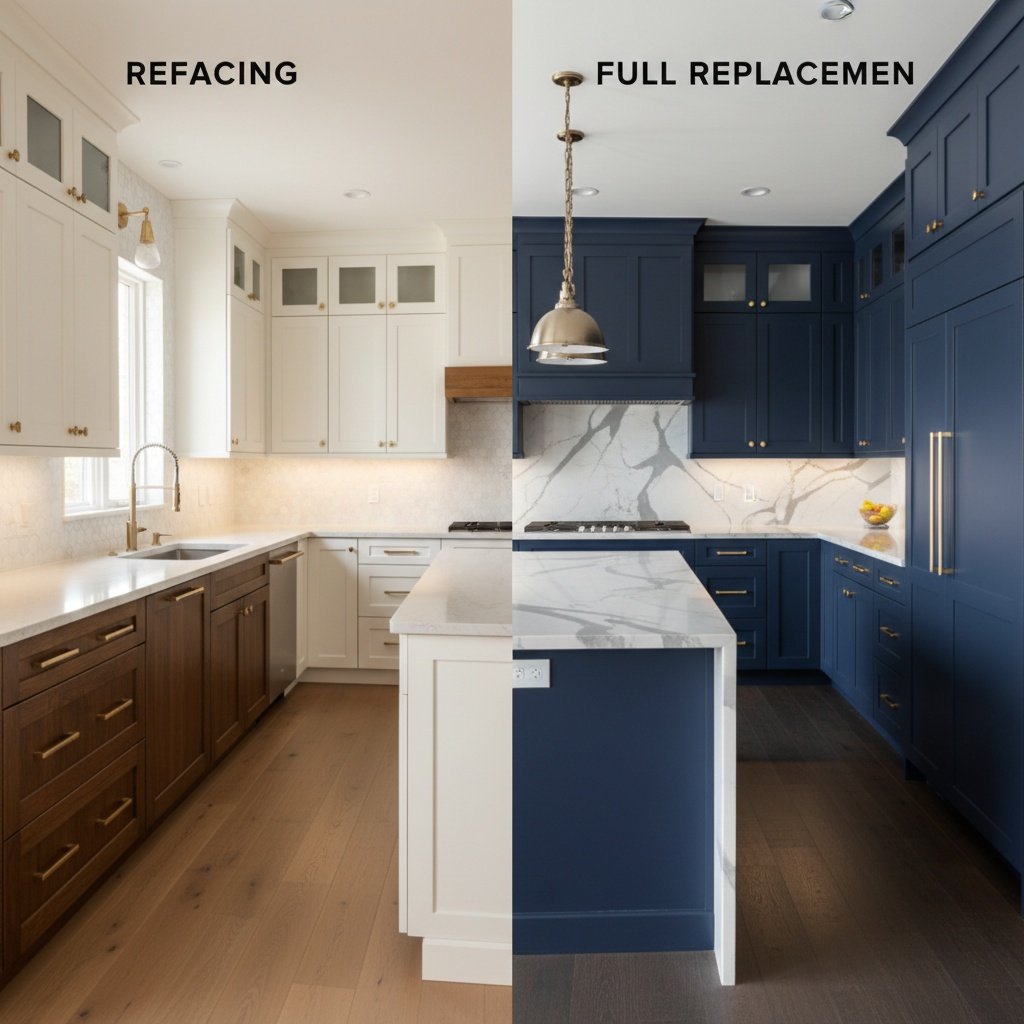
Choosing Between Refacing and Replacement
Your decision should weigh budget, timeline, and functional needs. If money is tight and your layout works, refacing delivers a dramatic visual update at half the cost. You will have a refreshed kitchen in days instead of weeks.
Choose replacement when you need layout changes, when existing boxes show structural damage, or when you are already planning related work. If you are moving walls, upgrading electrical, or installing new flooring anyway, the disruption from full cabinet replacement becomes less significant since the kitchen is already torn apart.
Consider your long-term plans. If you intend to stay in your home for 15 to 20 more years, replacement might make sense even at higher cost. If you are preparing to sell within five years, refacing offers excellent visual impact without over-investing.
Making Your Kitchen Update a Success
Both approaches transform tired kitchens into spaces you will enjoy daily. Refacing works beautifully for homeowners who love their kitchen layout but need a style refresh, while replacement suits those ready to reimagine their entire cooking space. The right choice depends on your specific cabinet condition, budget, and how you use your kitchen.
Expert Guys Construction LLC has completed kitchen remodeling projects throughout the Denver metro area for over a decade, helping families choose the update approach that matches their goals. Whether you decide on refacing or replacement, working with experienced professionals ensures quality results that last.
Ready to discuss which option fits your kitchen best? Expert Guys Construction LLC can evaluate your existing cabinets, explain your choices in detail, and provide accurate estimates for both approaches. Reach out at +18457161595 to schedule a consultation and start planning your kitchen transformation.